
Telecom Experience Audit
When everything is a priority, nothing is.
Role: UX Research & Strategy
Timeline: 2 weeks
Team: Product Management, Design, Strategy
Overview
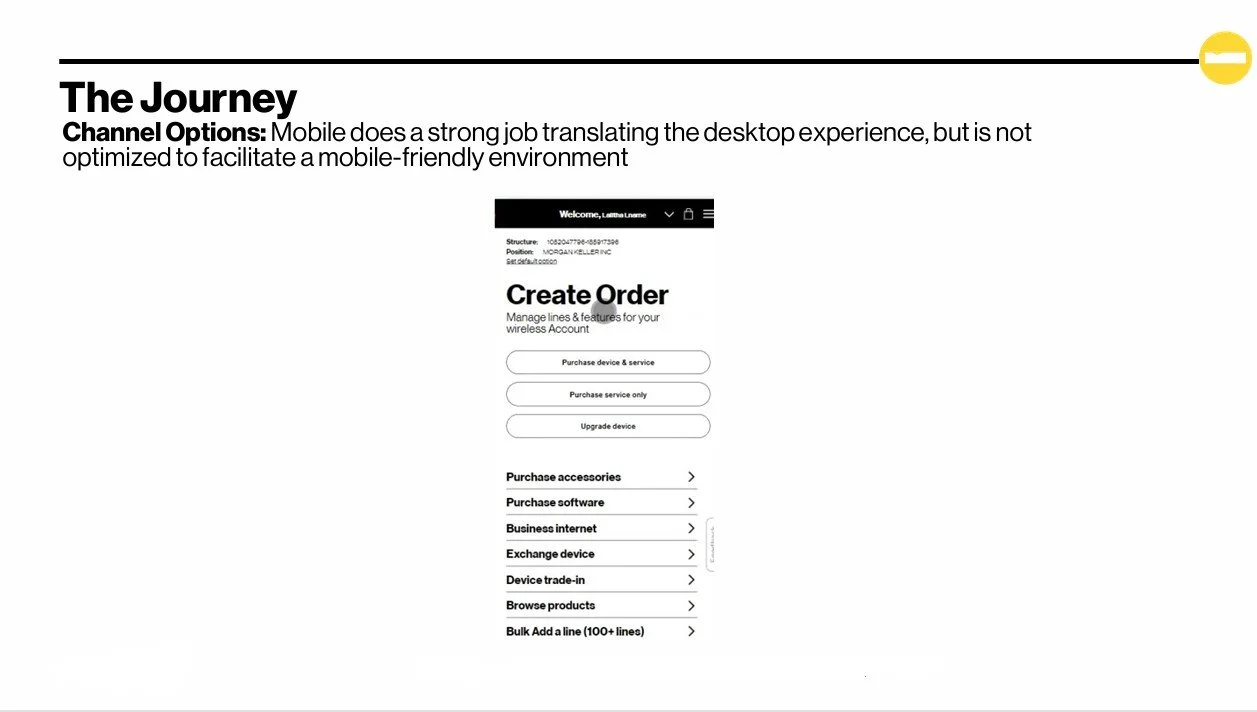
A major US telecommunications provider had an account management experience that had grown without direction for years. Navigation accumulated. Flows broke. Users got lost trying to do basic things like pay a bill or add a line. My team was brought in to find out exactly how bad it was and to build the case for what fixing it could look like. I led the UX audit, mapping three end-to-end user flows against Nielsen's heuristic standards, triaging every finding by severity, and delivering a strategic recommendations framework that leadership used to pursue further client work orders.
Problem
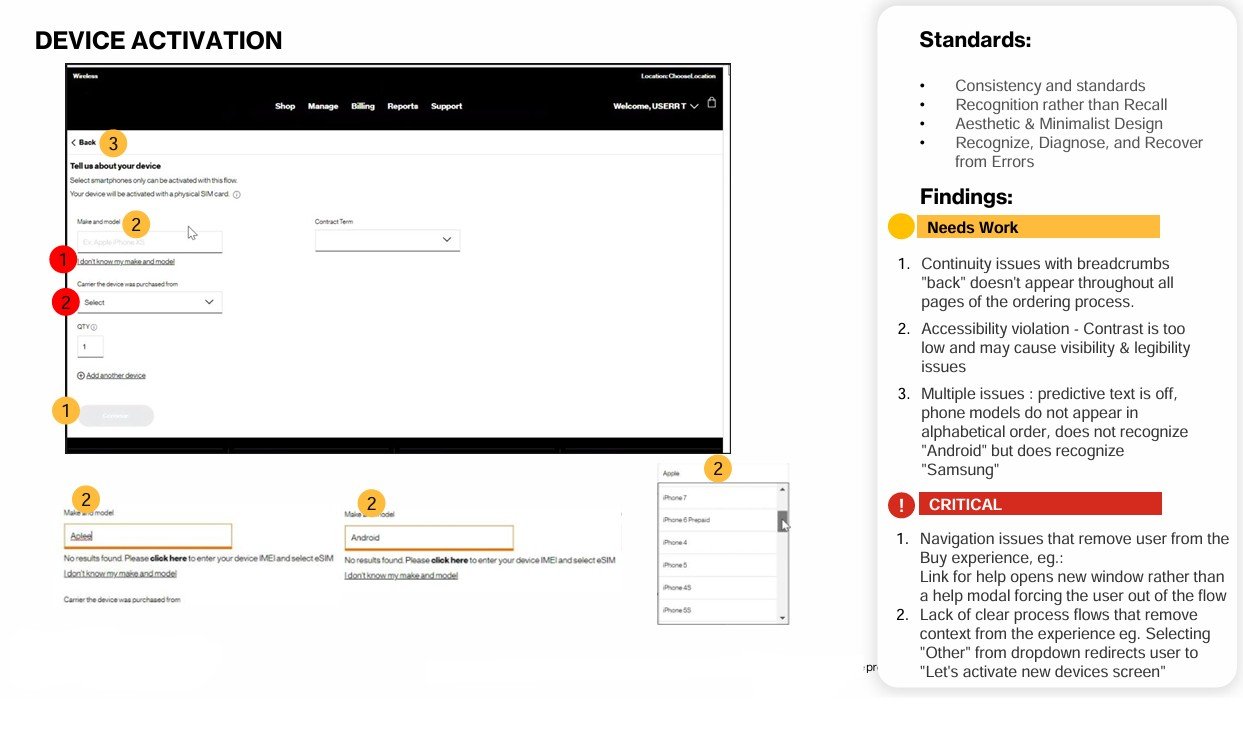
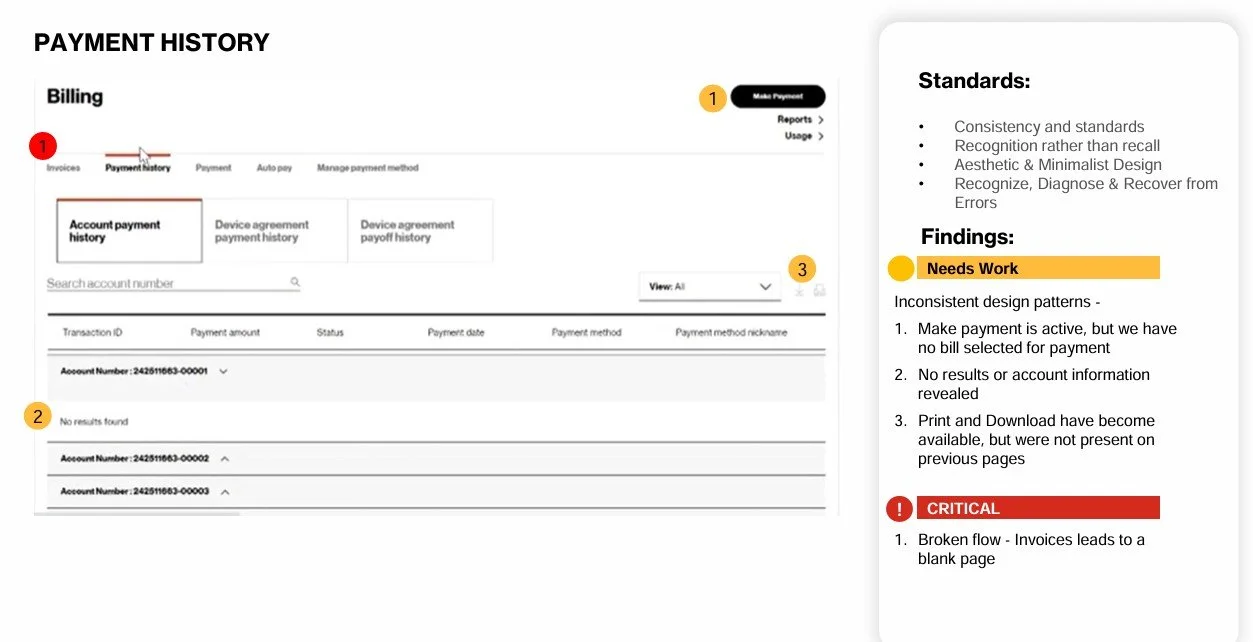
What we found wasn't one broken thing, it was a system that had grown without a coherent experience strategy behind it. Invoices led to blank pages. Breadcrumbs disappeared mid-flow. Users trying to add a device were redirected out of the purchase flow entirely by a link that opened a new window instead of a modal. Each issue in isolation was a bug. Together they were a signal that the experience had never been owned end-to-end.
Key Insight: The experience wasn't broken. It was unmanaged. Those are two different problems with two very different solutions.
Research & Process
Scope
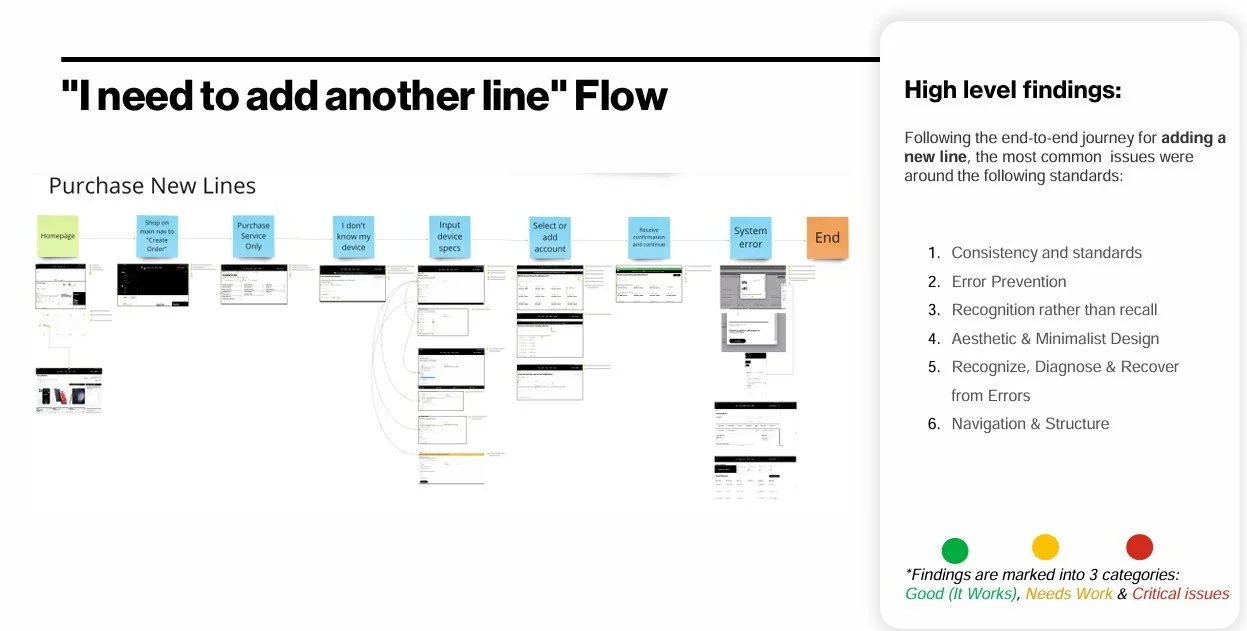
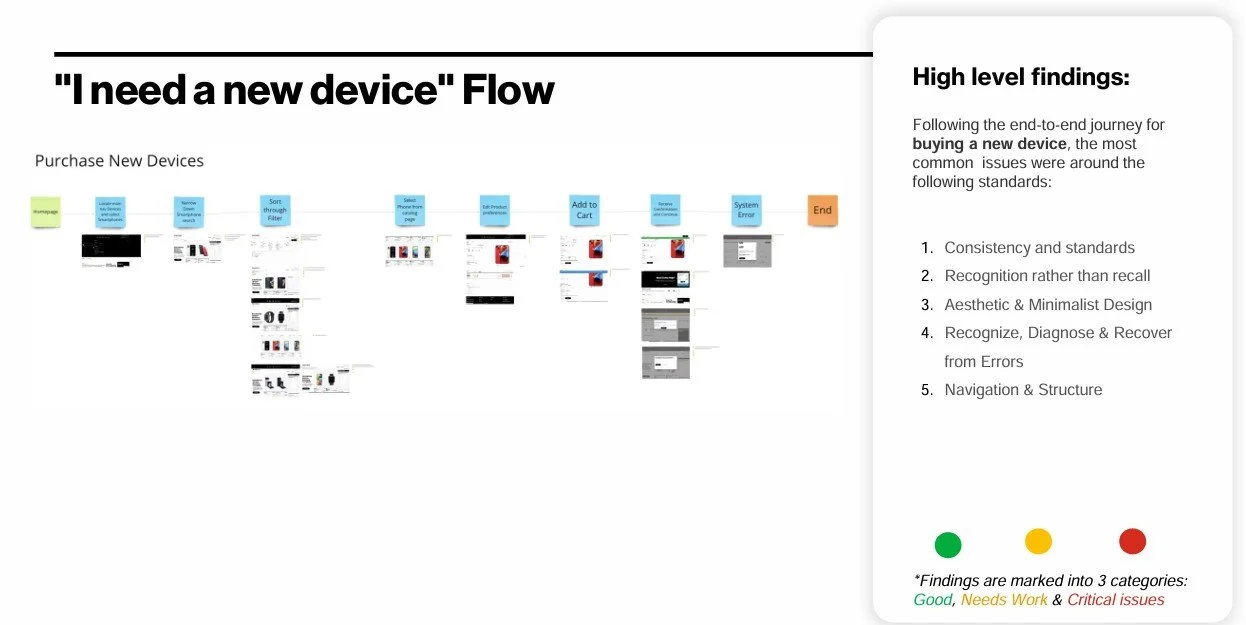
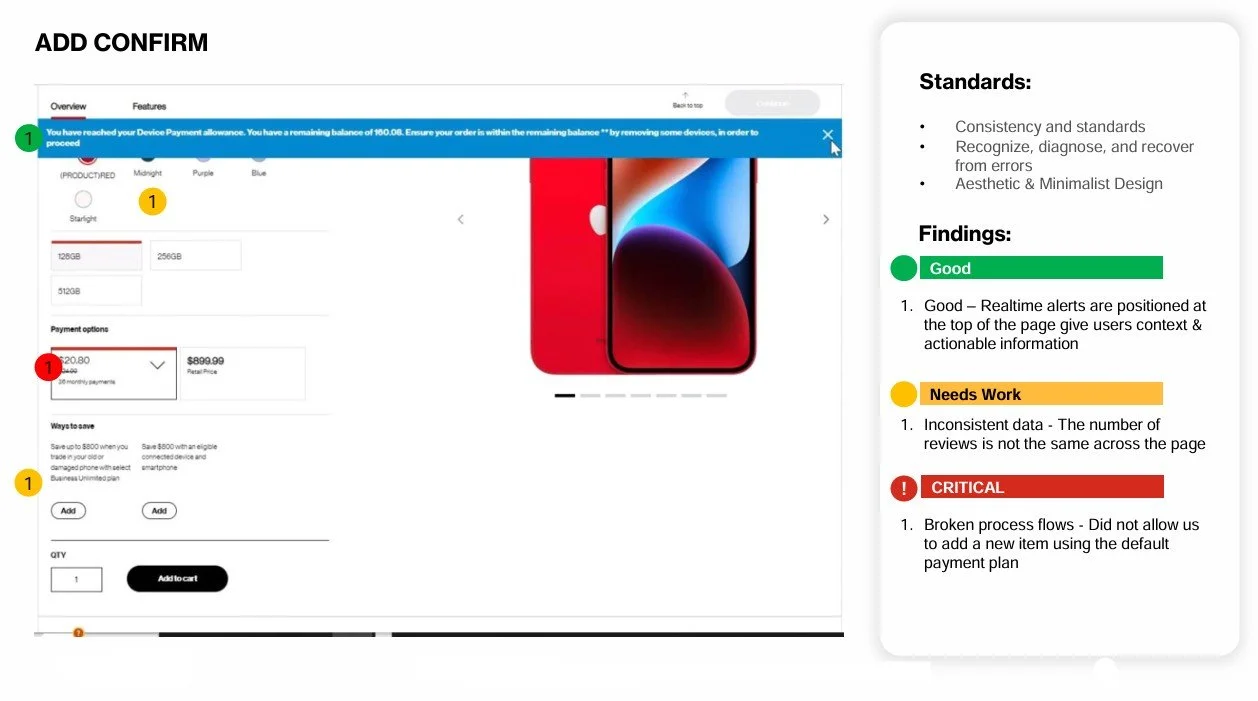
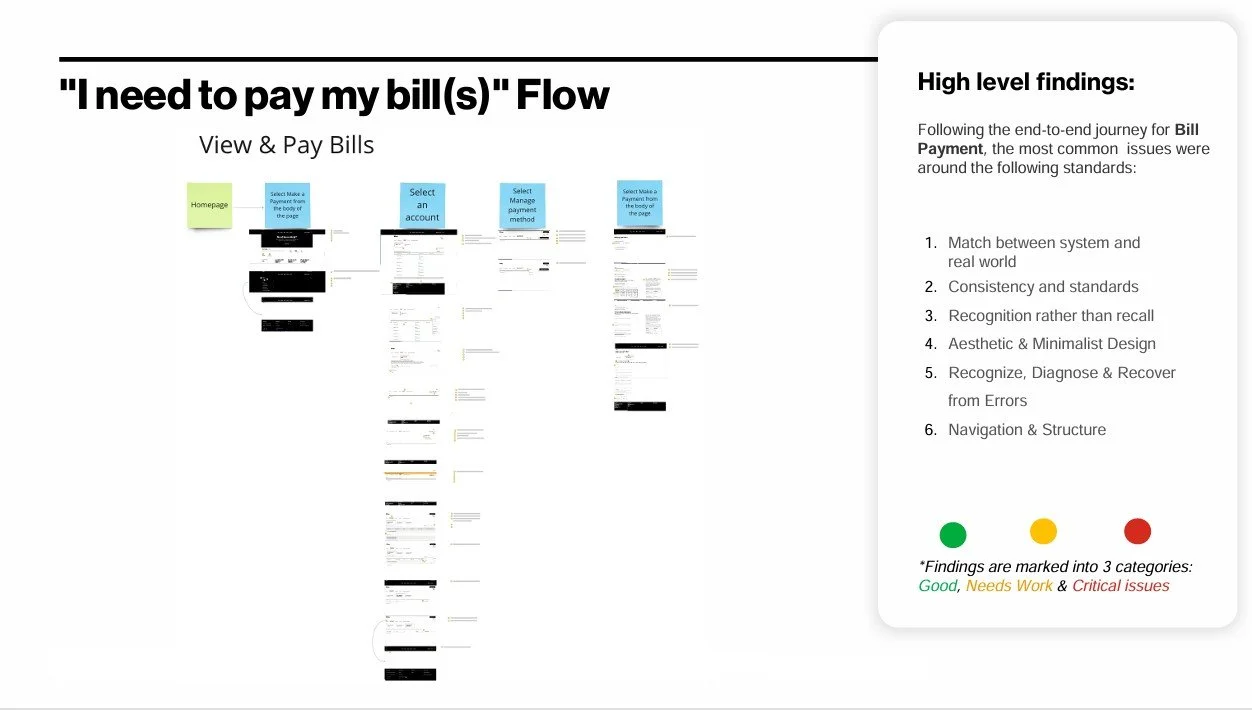
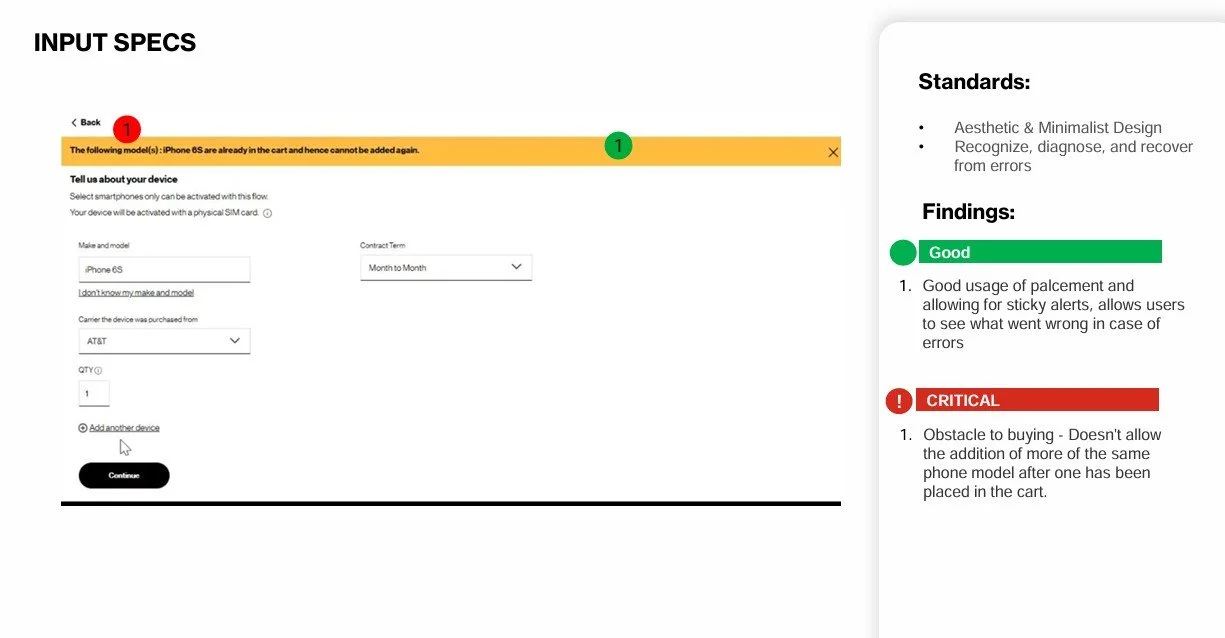
We mapped three primary user flows that represented the highest-frequency jobs customers came to the platform to complete: purchasing a new device, adding a line, and paying a bill. Each flow was walked end-to-end and evaluated against Nielsen's ten heuristic standards.
Heuristic Evaluation
Every screen in each flow was evaluated and findings were triaged into three severity levels Good, Needs Work, and Critical. Critical findings were those that actively blocked task completion or removed users from the experience entirely. Needs Work findings degraded confidence and clarity without fully breaking the flow.
Opportunities Framework
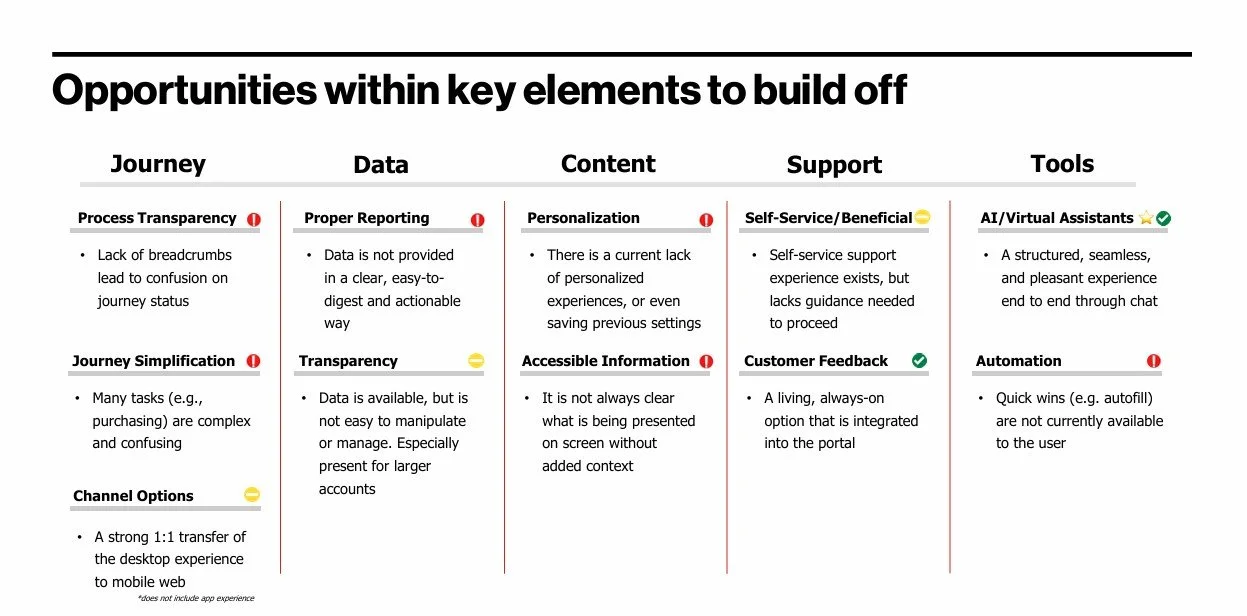
Findings were synthesized into five strategic opportunity pillars: Journey, Data, Content, Support, and Tools. This framing translated UX findings into business language that strategists and PMs could take directly into client conversations.
Findings & Recommendations
The most significant finding was the pattern. Across all three journeys, the same heuristics failed repeatedly: consistency and standards, error prevention, and navigation and structure. That repetition told us this wasn't a design execution problem. It was a systems problem. No one had ever owned the experience holistically.
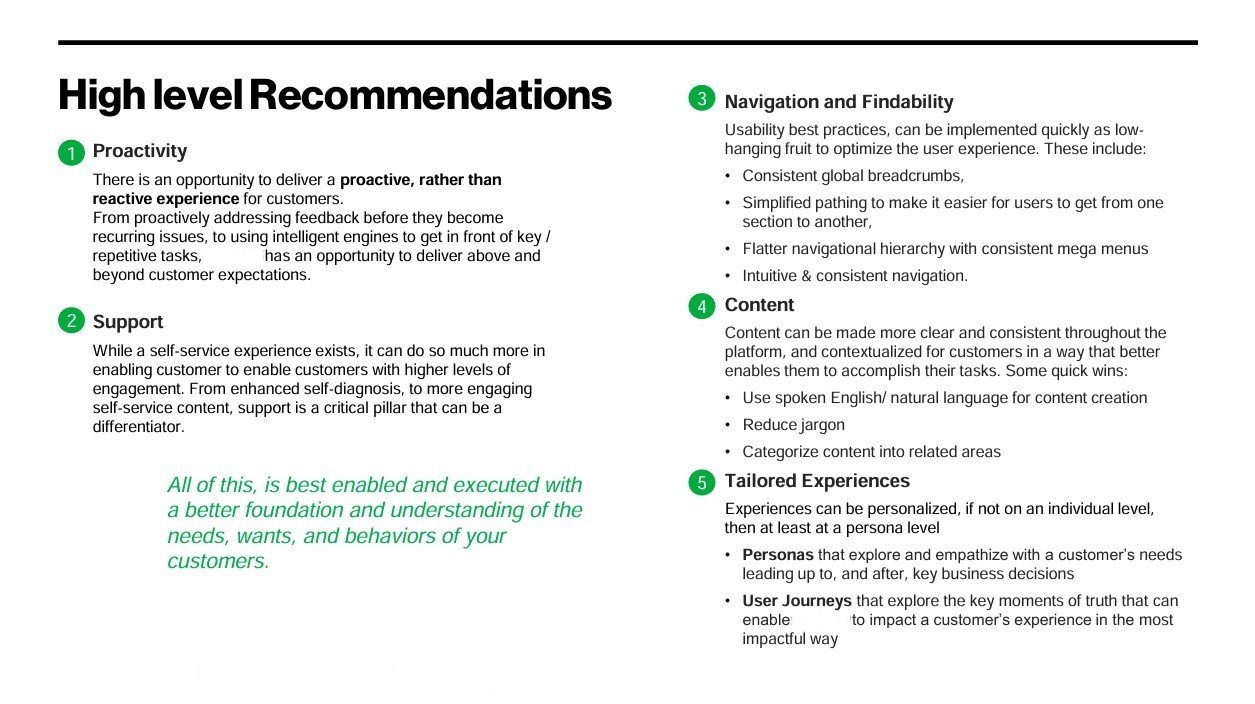
High-level recommendations were organized around five themes: proactivity, support, navigation and findability, content clarity, and tailored experiences. Quick wins such as consistent breadcrumbs, simplified pathing, and natural language content were identified separately from longer-term strategic investments like personalization and AI-assisted support.
Impact
The audit deliverables were used by strategy and product leadership to re-engage the client and make the case for a broader design partnership. The work demonstrated not just where the experience was failing, but what a prioritized path forward could look like and why it mattered at a business level.
Reflection
This project taught me something important about the difference between thoroughness and usefulness. A comprehensive audit is only valuable if the people receiving it feel equipped to act and not just file it away as a to-do list. I learned to organize findings around opportunity rather than failure, and to speak the language of the people who have to carry the work forward after you leave the room.
It also reinforced that the most senior thing a designer can do sometimes isn't design anything at all. It's seeing the full system clearly, and helping others see it too.